

When Something Kills a Goddess
Obsession, The Odyssey, Weak Men and Evil Women


“From 30 feet away she looked like a lot of class. From 10 feet away she looked like something made up to be seen from 30 feet away”.
~Raymond Chandler, The High Window
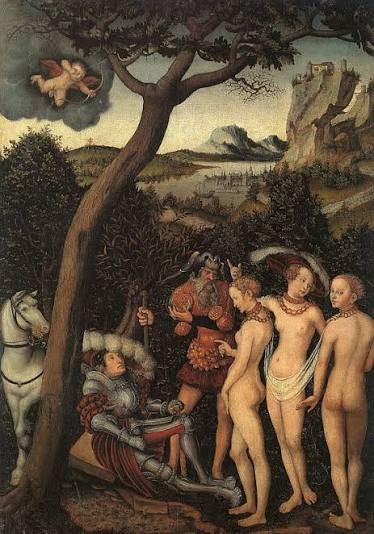
When something kills a goddess
While many await the Christopher Nolan treatment of The Odyssey, eager to air their vision of the epic against his, there’s another, lesser known version nested in one of my favorite books, I am not Jackson Pollack by John Haskell:
“The Trojan War begins like this: A young man named Paris is resting on his elbow in a lush green meadow filled with trees and grass and there’s a stream flowing through the middle of this paradise. Three goddesses are standing in front of him—Hera, Athena, and Aphrodite. They’re posing, waiting to be chosen by this young man, and to that end they’ve offered him gifts. Hera, queen of the gods, has offered him power. Athena, the goddess of war, has offered him victory in battle. Aphrodite, the goddess of beauty and love, has promised him the most beautiful woman in the world. Which is what he wants: Helen. The most beautiful woman in the world. With Aphrodite’s help he goes to her, woos her, and seduces her away from her husband, the king, and carries her back to Troy.
Paris doesn’t know the ramifications of his actions because he doesn’t want to know. He chose Helen not because he needed her but because she inspired in him more desire. He was living on a beautiful mountaintop with a beautiful woman and yet he couldn’t resist the possibility of having something more, of choosing a new kind of luxury. He was excited by the temptation of picking either A or B or C, and he didn’t realize it was a multiple-choice question. He could have picked “none of the above.” He could have said, “No thanks. I appreciate the opportunity but I’m fine here on my mountaintop with the woman who loves me.” He could have seen the story in a completely different light. But then he wouldn’t have been Paris.
The Judgment of Paris is a painting by Lucas Cranach, and in the painting the goddesses are completely naked. Aphrodite has a thin veil covering part of her body but basically they’re naked. Paris is fully clothed. It’s his judgment, and because they’re naked, even though they’re goddesses, they’re his women. They’re his women, but only in a dream. In the painting he’s shown with his eyes turned dreamily upward, and in the story the goddesses have been brought to him in a dream. But he doesn’t know that. He thinks they’re real. He believes they actually are standing in front of him, naked and completely exposed. And to the extent that it’s a dream, they are. But it’s not just a dream. When he chooses one particular goddess, the other two feel rejected, naturally, and they hate that. It kills them to be rejected, and when something kills a goddess, something else has to die.”
I am not Jackson Pollock w/ Jack Mason

Jack Mason of The Perfume Nationalist returns to discuss Balaklava Book Club’s inaugural selection, John Haskell’s I am not Jackson Pollock.
I am not Jackson Pollock is odd in the best way. In it Haskell weaves various stories, films, dramas, and descriptions of paintings to write on themes rather than events. He pulls from Hitchcock, using Psycho multiple times. He tells the story of Mercedes McCambridge, the woman who voiced the devil inside of Linda Blair in The Exorcist, and her real life struggles with faith and alcohol. And it covers the intensity, manipulation, and ruthlessness of Harry Lime in The Third Man. The book is timeless because Haskell writes on timeless subjects like habit, unrequited love, human captivity and agency, but rather than telling stories, which requires time (this happens and then this happens), Haskell suspends time as if all the scenes have already played, every painting has already dried, and the story of life itself has already been told. Instead of letting time pass, he juxtaposes these elements next to each other, collapsing the space between millennia. The story of Topsy the circus elephant’s death includes a retelling of the way Ganesha, the Hindu god of obstacles and remover of obstacles, got his head.
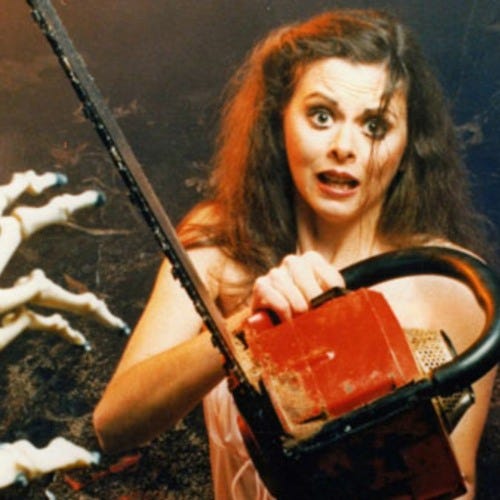
Haskell pulls from thousands of years of human history, mostly exploring the constraints of the human condition as rendered through art capturing our failings, our loneliness, our greed, war, and sadness for whosoever shall read his written words. Everyone must be a child of their own time, and Haskell, born in 1958, is perfectly positioned to write about films that came out in the Golden Age of Hollywood, just preceding his birth, as well as so many of the greats that debuted during his youth. Haskell tackles deep, heavy subjects with plain language, most frequently examining film, the medium of his time, to illustrate what might as well have happened on a hilltop in Anatolia thousands of years ago. His writing never ruins your desire to watch the films but instead adds layers of complexity to them, making you want to watch and rewatch them through his lense.
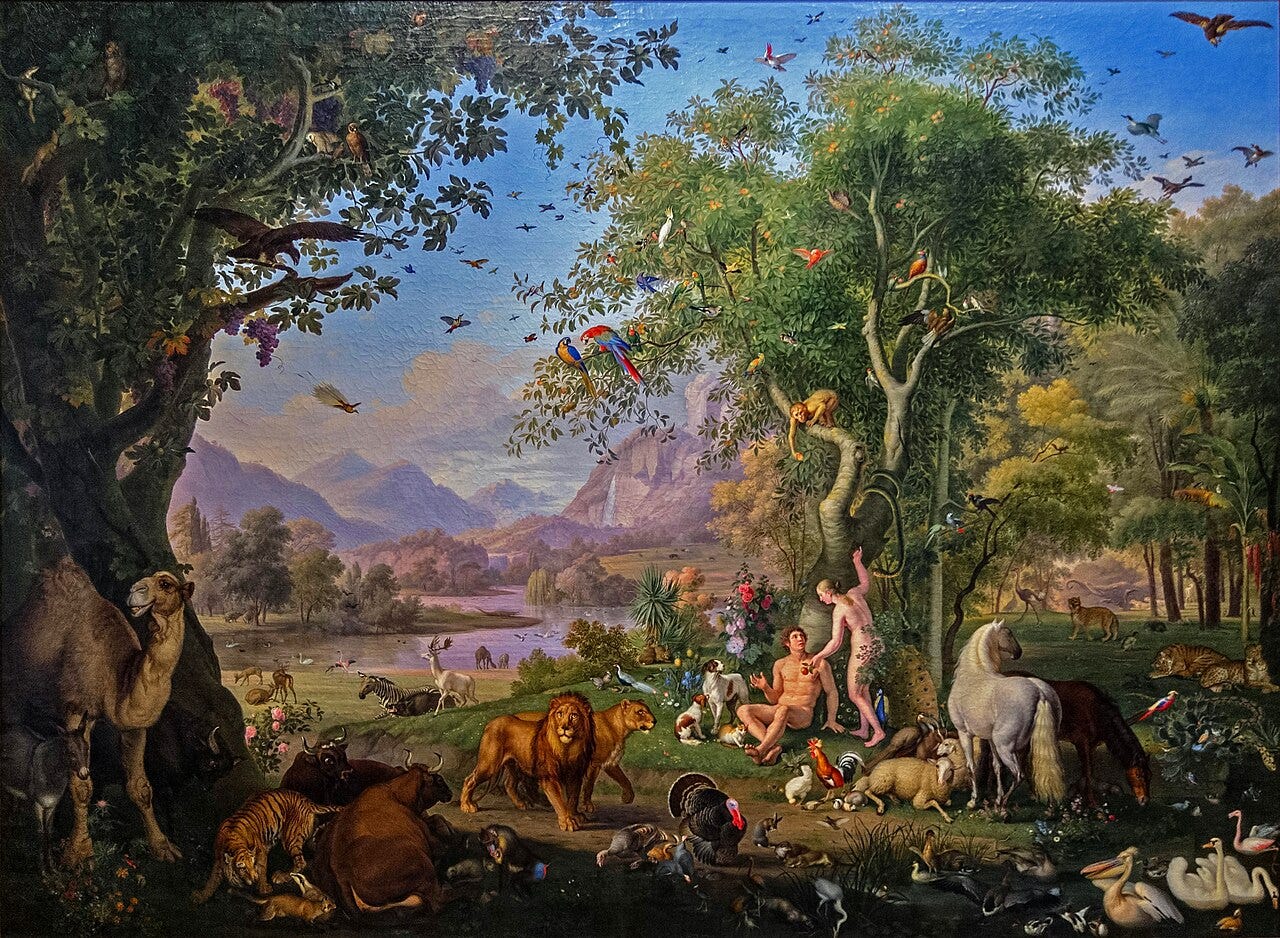
Something else has to die
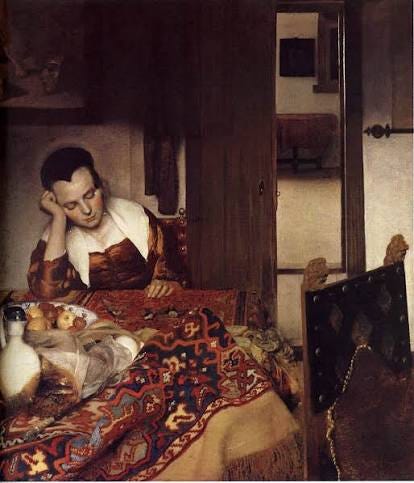
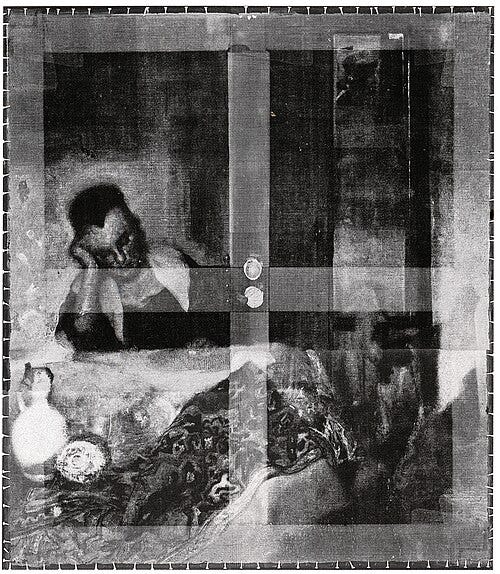
Curry Barker’s Obsession is a contemporary telling of the same theme Haskell pulls apart in the section of I am not Jackson Pollock called “The Passion of Psycho.” Haskell’s piece also features the preternatural forces of Norman Bates’ mother Norma in Alfred Hitchcock’s Psycho, and the influence of a figure long ago painted, disappeared, and rediscovered by x-rays all passing through the canvas of Jan Vermeer’s Girl Asleep at a Table.
Books like Carol J. Clover’s Men, Women, and Chainsaws make the case (hard to dispute) that scary movies are really about sex but I would add that many movies about sex are among the scariest there are.
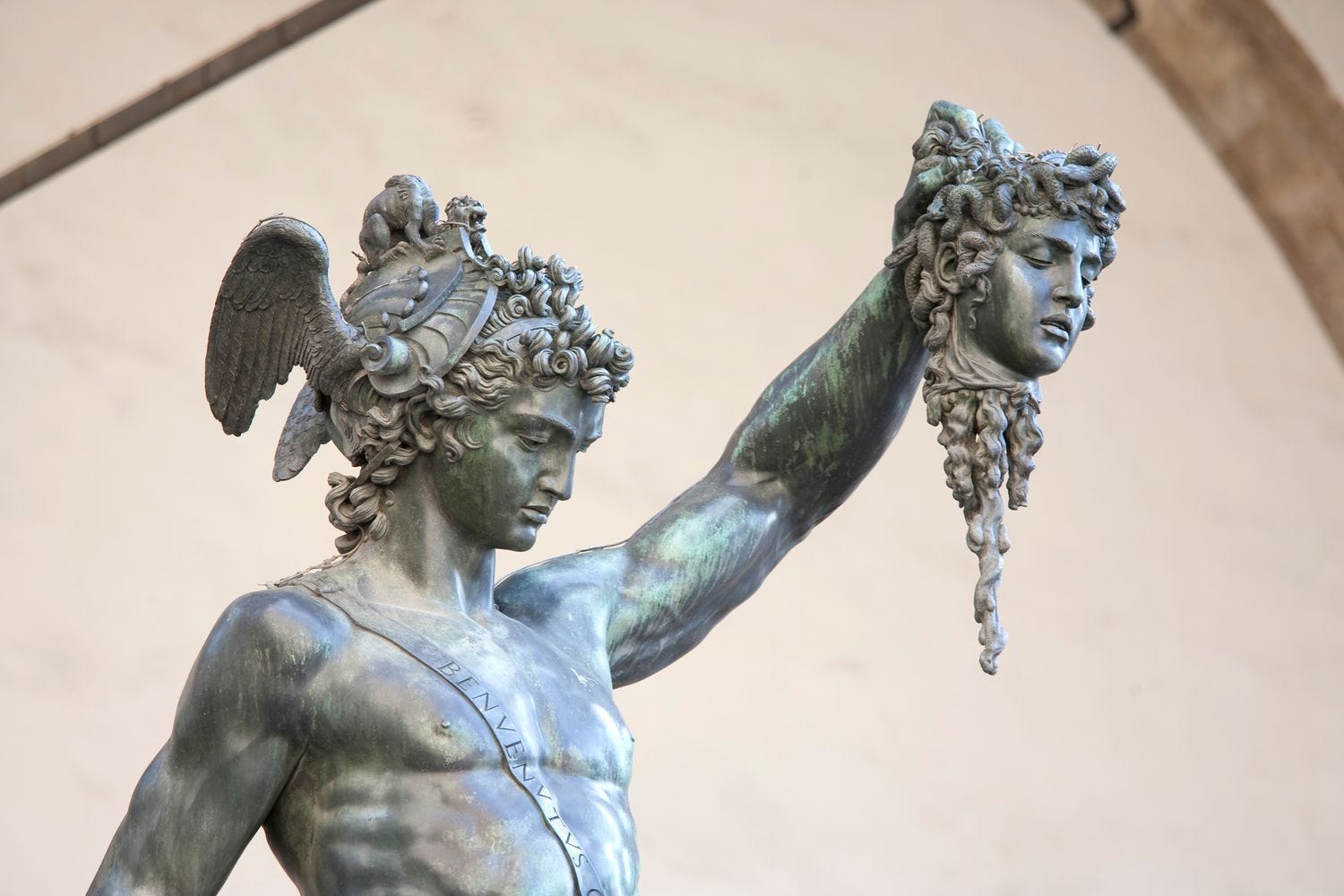
Obsession asks what happens when you get what you want? What happens to the dog who finally catches the car? Is Obsession about fear or sex? It’s obviously both.
The film features a sensitive young man (ironically named Bear) who has the hots for Nikki, one of two total babes who work at a family-owned guitar shop. Nikki is about to put in her two weeks’ notice which presents both a problem and an opportunity. If Bear fails to act, he’ll never get a chance to ask her out. The good news is that if he strikes out with her, he won’t be forced to work with her for too much longer. The other problem is Bear is weak.
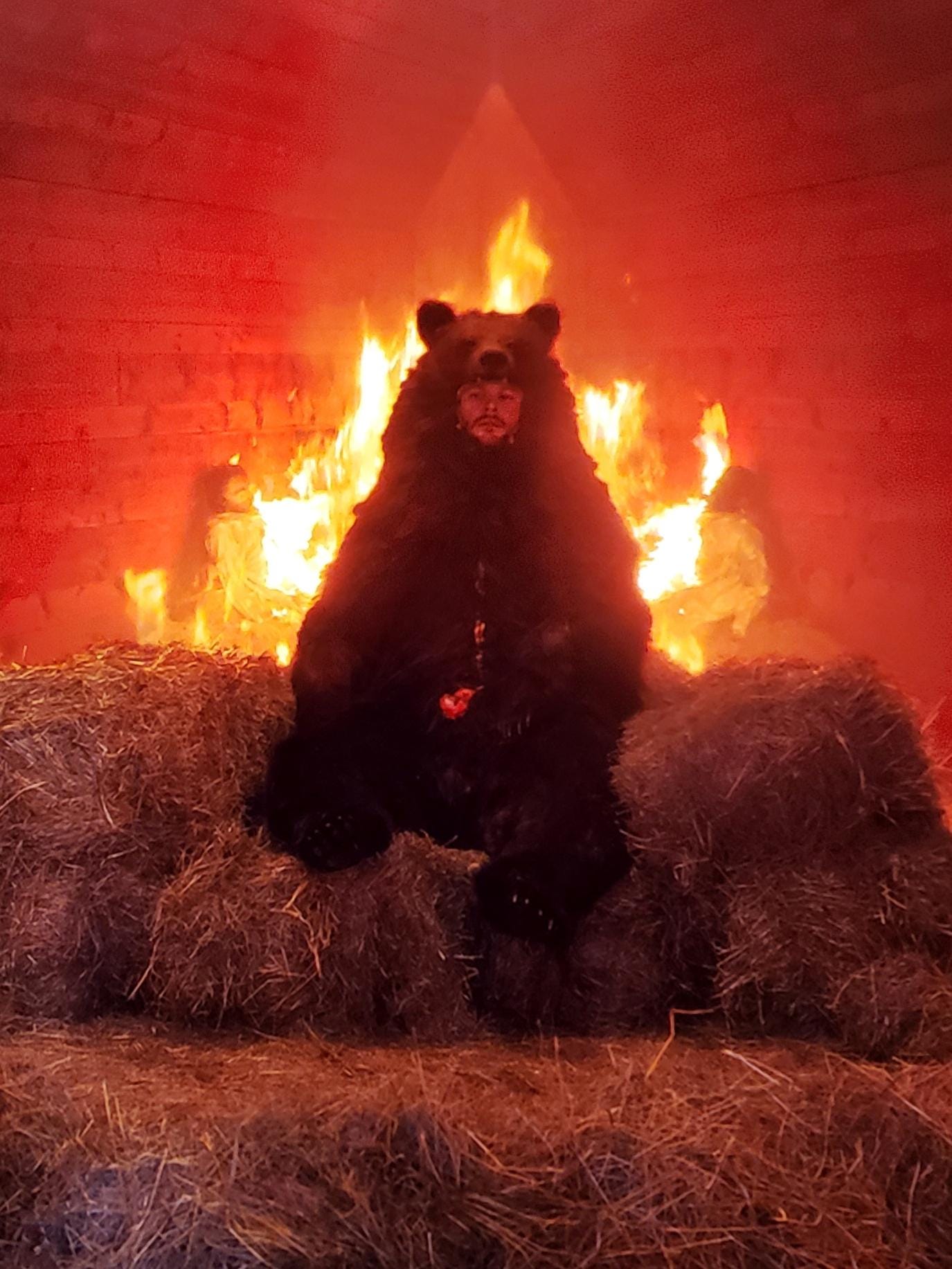
Bear is a SIMP but rather than turning to The Red Pill, The Manosphere, bone smashing or hoe-scaring ideology to correct course, he does what any sensitive young man would. He tries to solve his problems (distinctly male) by acting like a woman (buying stuff and using everything but personal accountability):1 He goes to a store selling Wiccan and Pagan objects, settling on a novelty item called One Wish Willow that’s supposed to grant you exactly one wish (in an obvious-to-the-audience Monkey’s Paw kind of way).
But as often happens when you take shortcuts and refuse responsibility, things don’t quite go according to plan. Rather than landing the sweet brunette next door, Nikki becomes obsessed with Bear but turns into way too much of what he ordered. The natural order of life relies on Nikki (beautiful, petite, feminine) and women in general passing over weak men, at least until they’re ready to be strong. But by overriding his own approach-anxiety with magic rather than action, Bear unlocks darker aspects of female sexuality. Nikki promptly begins transgressing all of Bear’s boundaries, destroying his reputation, and using nothing but pure emotion to get what she wants but, of course this is necessary to the plot trajectory as only weak men put up with this shit and the audience needs to learn a lesson about ignoring their own limitations at the end of this thing.

As The Last Psychiatrist writes in “Real Men Want To Drink Guinness, But Don’t Expect Them To Pay For It,”
“I know this is going to sound like madness, but 8/10 that approach anxiety is defensive, you think you want something you really do not want, that person is not for you, I don’t mean not good for you, I mean you do not really want this (...) but the horrifying, Ju-On reality is that the symbol ceases to be a symbol for you the moment she violates her own symbolism—the moment you get to know her—and then the want DISAPPEARS. Just like fear. If that ghost in the window so much as coughs like reality you will scale the wall and beat it the fuck out.”
Without offering you any real spoilers, you probably have a vague sense of how this one ends. Humans have been documenting it and weaving it into their art for thousands of years. While it’s been a few decades since the femme fatale was an acceptable part of Hollywood narratives, feminism is pretty crusty at this point, Hollywood is on the decline and the appetite for knowledge our society regularly suppresses is large. Independent writers and directors are eager to take up the mantle, showing human relations how they actually are, if dramatized for the screen.
Obsession is the first great film I’ve seen this year but I haven’t had enough time to figure out if it’s one for the ages. As far as I am not Jackson Pollock goes, you just have to get yourself a copy and argue with me if I’m wrong.
Also see bone mashing and made-up internet ideologies.
Almost paywalled this jam. You're welcome.
The quote at the beginning is a mild version of what the Japanese call a hyaku mētoru bijin (百メートル美人) a "hundred meter beauty." They also have the phrase ushiro bijin (後ろ美人) "beauty from behind."